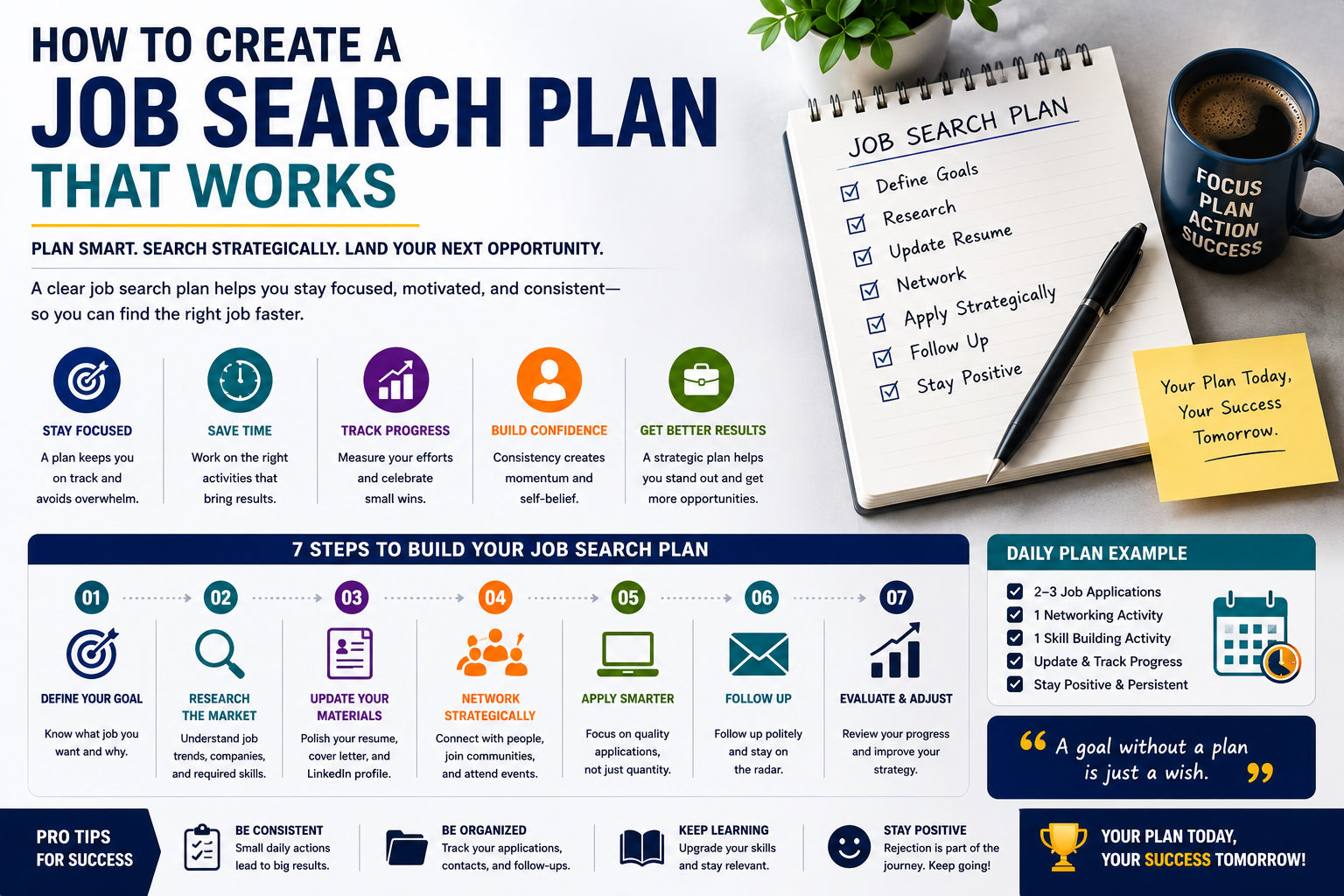
How to Create a Job Search Plan That Works – The 2026 Guide
Introduction: Treat Your Job Search Like a Strategic Project
Let's be honest. Job searching can feel like a full-time job in itself – exhausting, frustrating, and often confusing. You send out dozens of applications, wait for responses that never come, and wonder if you're doing something wrong. Sound familiar?
Here's the thing: random applications rarely lead to dream jobs. Research shows that people who proactively manage their job search are more successful and experience higher well-being. The difference between those who get hired and those who stay stuck often comes down to one thing – having a structured plan.
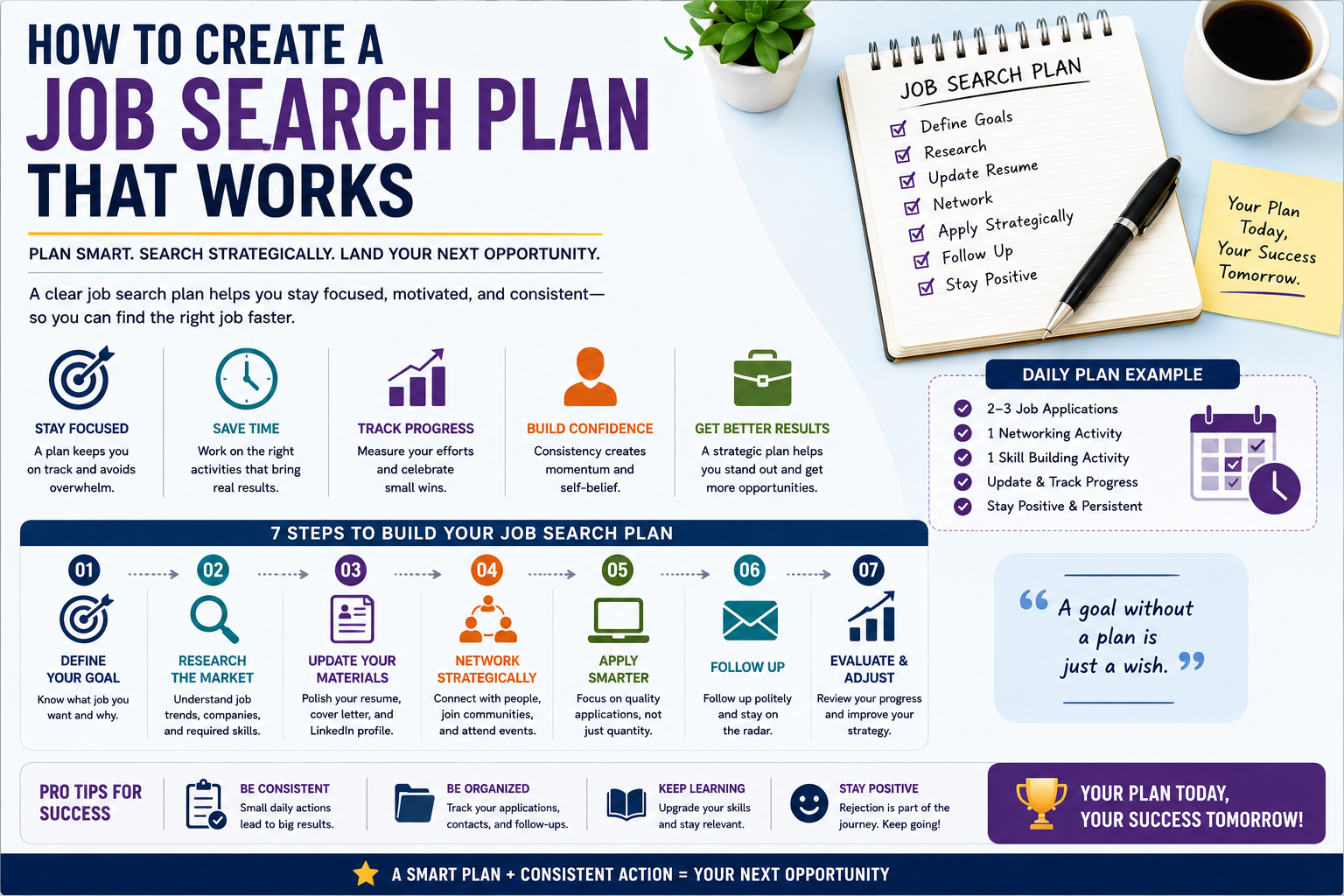
Think of your job search as a strategic project. You wouldn't start a major work project without a plan, milestones, and tracking systems. So why treat your career differently? This guide will walk you through creating a job search plan that actually delivers results – step by step.
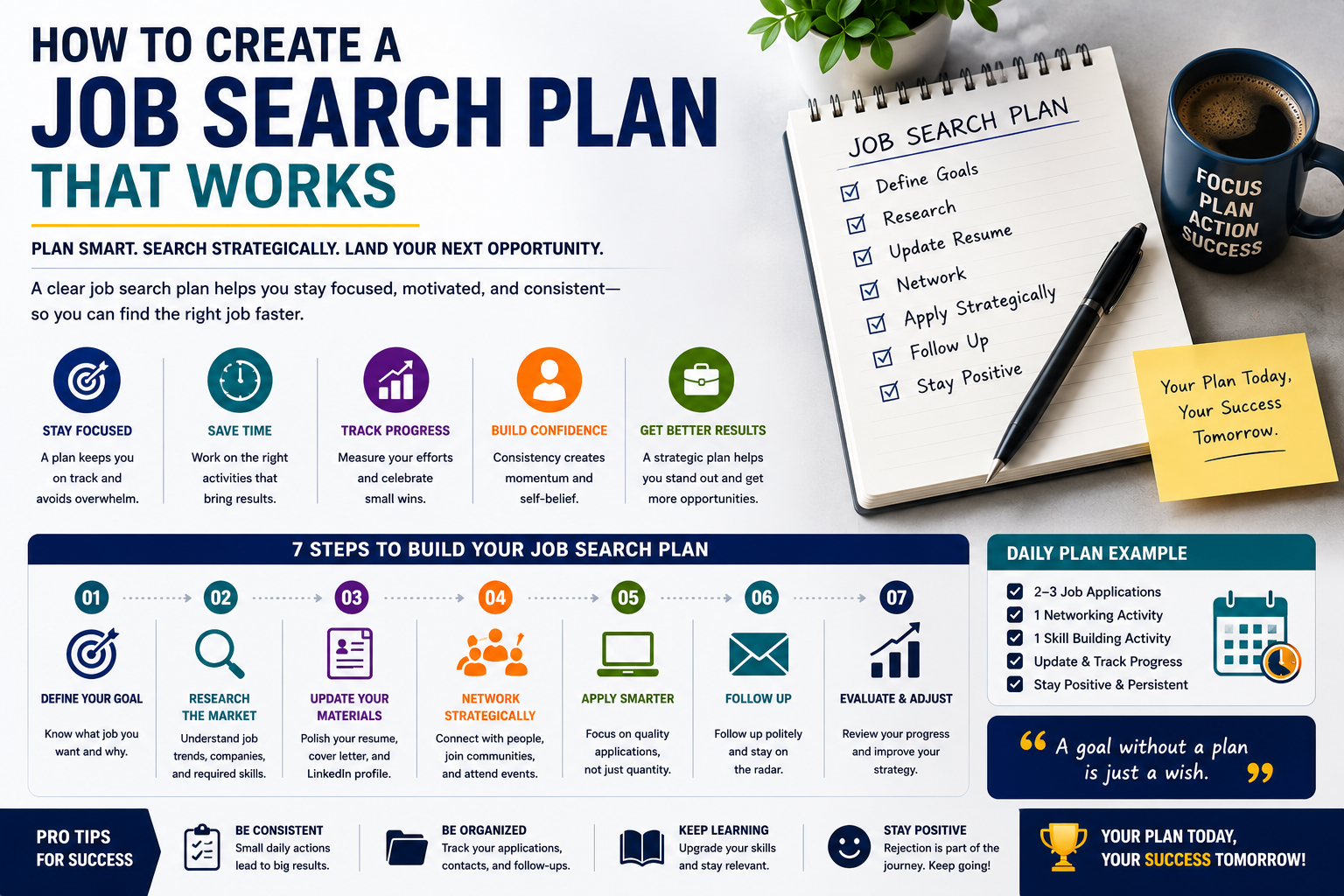
Chapter 1: Start With Yourself – Define What You Want
Before you send a single application, you need clarity. Most candidates skip this step and end up applying to roles they don't actually want.
Identify Your Non-Negotiables
Ask yourself:
- What type of position are you looking for?
- What sector or industry excites you?
- What are your must-haves – salary range, work-life balance, company culture, career development?
- What are your deal-breakers (e.g., toxic management, long commutes, rigid hours)?
Take an Honest Skills Inventory
Before you can market yourself, you need to know what you're selling. Ask yourself:
- What are my technical skills (software, languages, certifications)?
- What are my transferable skills (communication, leadership, problem-solving)?
- What have I actually accomplished? Use numbers wherever possible.
- What makes me different from other candidates?
Chapter 2: Build Your Target List – Quality Over Quantity
Here's a harsh truth: spraying your resume to 100 companies rarely works. Quality applications consistently beat mass applications. Employers can quickly tell when an application is generic, and those tend to blend into the background.
Create a Curated List of 20-30 Companies
Your goal isn't to apply everywhere – it's to apply where you genuinely want to work. This focus makes your applications stronger and your networking more effective.
Where to find companies:
- LinkedIn company pages and recruiter searches
- Indeed and industry-specific job boards
- Your university's career portal or alumni network
- Professional associations and industry publications
Pay Attention to Job Posting Dates: Most employers hire on a rolling basis. Candidates who apply within the first week after a position is posted have a significantly higher chance of being considered for an interview.
Quick tip: Set up job alerts on platforms like LinkedIn and Indeed. Then check them daily – ideally in the morning when you're fresh.
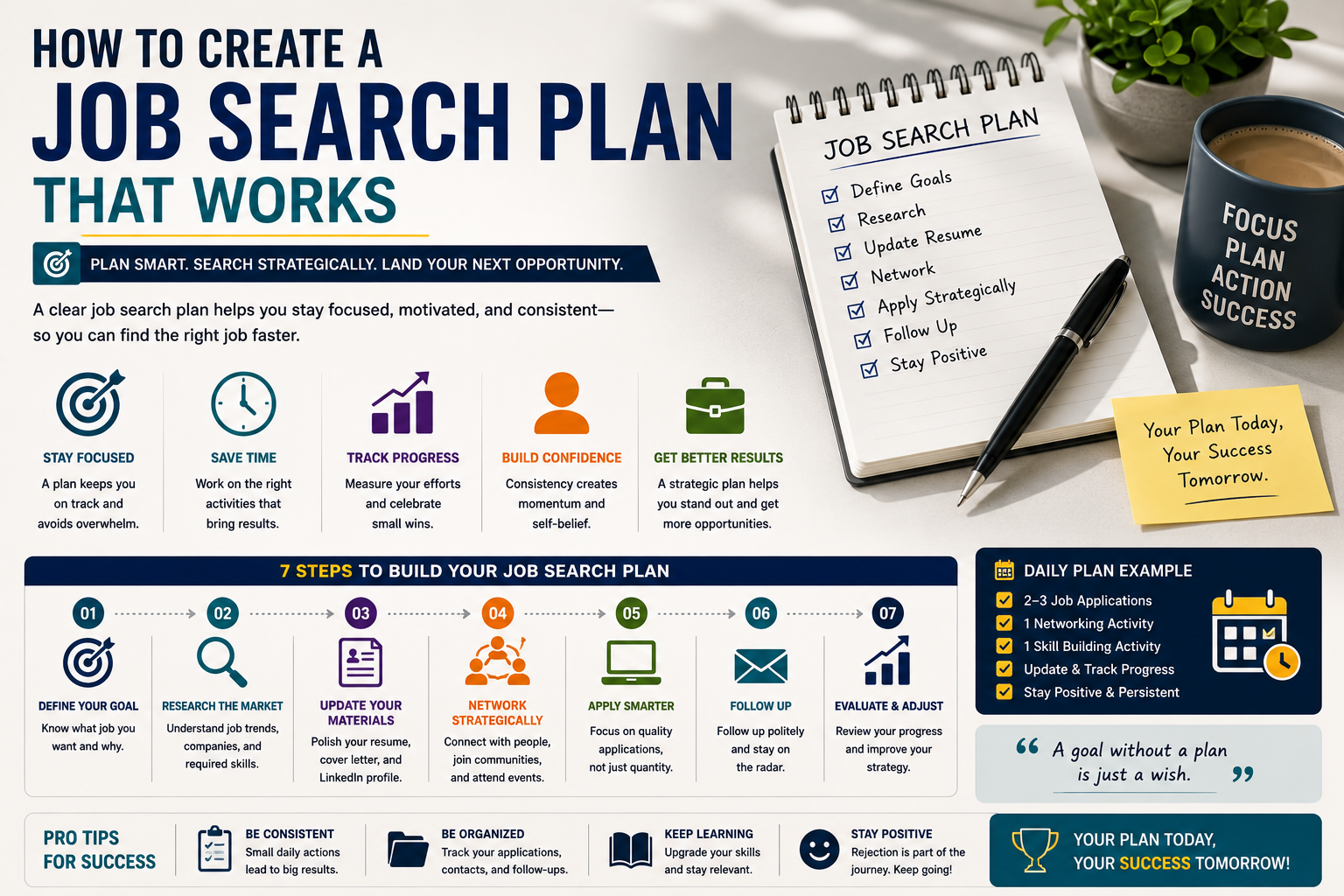
Chapter 3: Build Your Tracking System – Stay Organized
One of the biggest mistakes job seekers make is trying to track everything in their heads. It's messy, it's exhausting, and you'll drop opportunities.
Use a Job Search Tracker
Create a spreadsheet or use tools like Trello, Notion, or Airtable to track:
| What to Track | Why It Matters |
|---|---|
| Company name and role | Quick reference when they call |
| Date applied | Know when to follow up |
| Application status | Applied, interview scheduled, offer, rejected |
| Contact person | Personalize follow-ups |
| Next steps | Never drop the ball |
| Notes | Remember key details from conversations |
Pro tip: Color-code your tracker (green = applied, yellow = waiting, red = follow-up needed) for easier visual navigation.
Set Follow-Up Reminders: Add calendar alerts or task reminders to follow up with employers 7-10 days after submissions or interviews. Most candidates never follow up – your short, specific note can make a real difference.
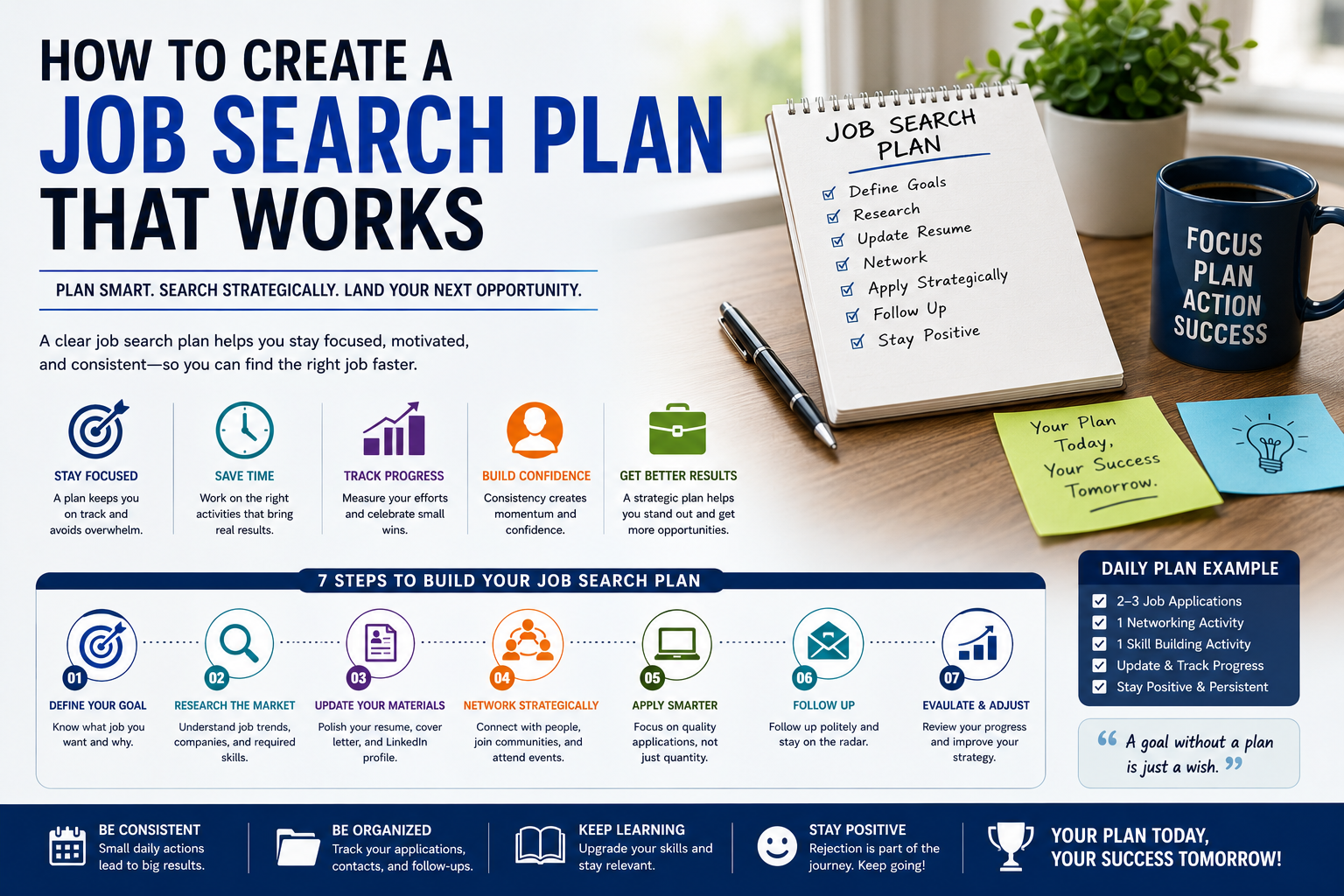
Chapter 4: Create Your Weekly Workflow – Build Habits, Not Panic
Job searching in intense bursts followed by guilt-ridden breaks burns you out. Instead, treat it like going to the gym – same time, same routine.
The Weekly Game Plan
Research shows that people who set specific goals and track them follow through more often. Here's a weekly structure that works:
Pamela Langan, a career coach with over 11 years of experience, recommends 2-3 focused sessions per week rather than daily marathons. She's found that the most successful jobseekers spend equal time on researching and networking as they do on applying.
The 30-Minute Daily Routine: Don't have hours to spare? Even 30 minutes a day can create momentum:
- 1-5 min: Check job alerts and new postings
- 6-15 min: Tailor and submit one application
- 16-20 min: Update your tracker
- 21-25 min: Engage on LinkedIn (comment, share, connect)
- 26-30 min: Follow up on a previous application or learn something new
Chapter 5: The Networking Strategy – Your Secret Weapon
Here's a number that might surprise you: 70-80% of all positions are filled through networking. When you have a personal connection, you're not competing in an application pile – you're having a conversation.
Understand the Three Job Search Channels:
| Channel | Success Rate | Best Use Case |
|---|---|---|
| Online job boards | 10% | Identifying companies to research, not your primary strategy |
| Company websites | 20% | Targeted applications to companies you genuinely want to work for |
| Networking | 70-80% | Your primary strategy |
Network Without Being "That Person": Nobody likes the person who only reaches out when they need something. Here's a better approach:
- Start with people you already know – classmates, former colleagues, professors, friends, family.
- Build genuine relationships – share articles, comment on posts, introduce people who should know each other.
- Be curious, not transactional – when you reach out, ask about their career path and advice, not just for a job referral.
"Hi [Name], I loved your take on [specific thing they posted]. It made me think about [related insight]. I'm exploring [type of role] positions and noticed you made a similar transition. Would you be up for a quick coffee chat? I'm happy to share what I learned about [relevant topic] from my time at [company]."
Conduct Informational Interviews: The best time to reach out to people is often when there aren't any openings. This allows for natural conversation about their career path, company culture, and hiring cycles. When a role does open, you'll be top of mind.
After the meeting, always send a thank-you note. Share an article of interest that could benefit the other person to show you value the connection beyond your needs.
Chapter 6: The Application Strategy – Tailor or Fail
Why Generic Applications Don't Work: 84% of recruiters say they don't look at resumes that haven't been customized. Tailored resumes are 31% more likely to get selected than generic ones.
The fix: You don't need to rewrite everything from scratch. Just highlight the most relevant experiences differently for each role.
Use Keywords – For Both Humans and Machines: Applicant Tracking Systems (ATS) screen resumes for keywords before a human even sees them. To pass these systems:
- Analyze the job description – what words do they use repeatedly?
- Mirror that language – if they say "project management," don't say "task coordination."
- Work keywords naturally into your resume's summary, experience bullets, and skills section.
Pro tip: Tools like Jobscan can help align your resume's keywords to the job description.
Show Impact, Not Just Duties: When describing your experience, go beyond "what you did." Use numbers to quantify outcomes.
- Weak: "Updated social media content to grow followers."
- Strong: "Increased weekly social media engagement by 60%, generating 50,000 content interactions over a quarter, resulting in 40% follower growth."
Chapter 7: Manage Your Time and Energy
Use Productivity Techniques That Work:
| Technique | How It Helps |
|---|---|
| Eisenhower Matrix | Prioritize tasks by urgency vs. importance |
| Pomodoro Technique | Work in 25-minute focused bursts, then take a 5-minute break |
| Time Blocking | Schedule specific hours for applications, networking, and learning |
| 1-3-5 Rule | Identify 1 big, 3 medium, and 5 small tasks to complete each day |
| Eat the Frog | Tackle the one thing you're most likely to procrastinate on |
Protect Your Well-Being: Job search fatigue is real – nearly 75% of job seekers believe the process is one of the most stressful aspects of life. Managing your energy is essential.
- What you CAN control: Tailoring your resume, expanding your professional network, looking at different sources for job listings.
- What you CANNOT control: The technology (ATS systems), the volume of applicants, what the rest of the candidate pool looks like.
Self-care practices:
- Exercise regularly to reduce stress
- Get enough sleep for decision-making power
- Talk to friends and family for support
- Join online job-seeker groups for understanding
- Set boundaries on job search time (don't let it consume your life)
Chapter 8: The Friday Check-In – Reflect and Adjust
This is where the magic happens. Every Friday, take 10-15 minutes to reflect:
- What worked this week? Track metrics like how many applications led to responses, which networking messages got replies, and what interview questions tripped you up.
- What was a waste of time? Identify tasks that didn't move you forward and cut them.
- What am I changing next week? Adjust your approach based on data, not emotion.
Small insights add up: One job seeker noticed recruiters responded better to shorter emails. Another realized morning applications got more views.
If your search isn't moving to the interview stage, it's time to switch up your strategy. Don't do the same thing for six months and expect different results.
Chapter 9: Take Ownership – You're the CEO of Your Search
Treat your job search as your project:
- Set your own milestones – don't wait for external validation
- Reflect on progress weekly – celebrate small wins (not just offers)
- Adjust based on what's working – be flexible and learn
- Ask for help when needed – career advisors, mentors, and friends can offer fresh perspectives
Chapter 10: Quick Reference Summary
| Area | Action | Frequency |
|---|---|---|
| Self-Assessment | Inventory skills, values, and non-negotiables | Once, revisit every 6-12 months |
| Target List | Curate 20-30 companies to target | Ongoing |
| Tracker | Log applications, contacts, and next steps | Every application |
| Applications | Tailor resume with keywords, show impact | 1-2 per day (quality over quantity) |
| Networking | Connect with contacts, send follow-ups, attend events | Weekly |
| Learning | Spend 30-60 minutes on skill development | Weekly |
| Reflection | Review wins, adjust strategy | Every Friday |
FAQ – Your Burning Questions Answered
Conclusion: Your Plan, Your Future
A successful job search in 2026 isn't about chasing every opportunity. It's about clarity, focus, and consistency. Candidates who understand what they want, communicate it well, and invest in the right relationships are seeing stronger outcomes and better long-term fit.
You don't need to job search for hours. With a structured routine that aligns with modern hiring practices, you can stay consistent, visible, and in control. The secret is structure, not grind.
Remember:
- Start with yourself – know what you want and what you offer
- Build a target list, not a spray-and-pray approach
- Use a tracker to stay organized
- Network – it's your highest-return activity
- Tailor every application
- Protect your well-being – the search is a marathon, not a sprint
- Reflect and adjust weekly
Your future career starts with the plan you build today. Now go create it. 🚀