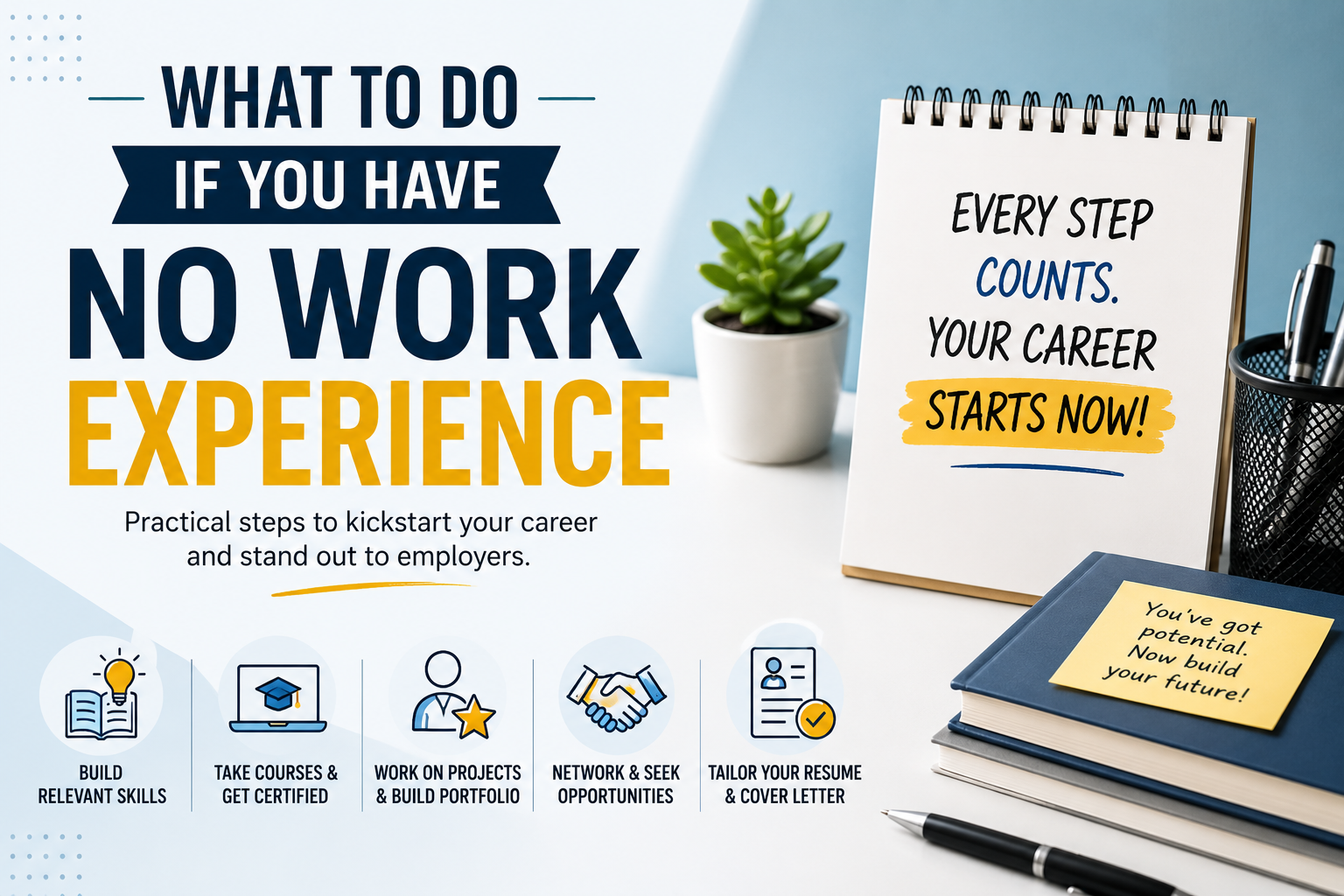
What to Do If You Have No Work Experience – Your 2026 Action Plan
"How am I supposed to get a job when I don't have anything to put on my resume?"
If this question keeps you up at night, you're not alone. It's the classic catch-22: every entry-level job seems to demand 2-3 years of experience, yet how are you supposed to get that experience without a job? It's frustrating, it's demoralizing, and it can make you feel like the system is rigged against you.
Here's the thing: you have more to offer than you think. You do have experience. It just might not look like the traditional "paid role at a well-known company" that you're picturing. The solution isn't to panic—it's to recognize, reframe, and strategically present the valuable skills you've already built.
This guide will show you exactly how to do that. We'll break down the myth of "zero experience," teach you how to identify your transferable skills, and give you a step-by-step plan to land that first opportunity.
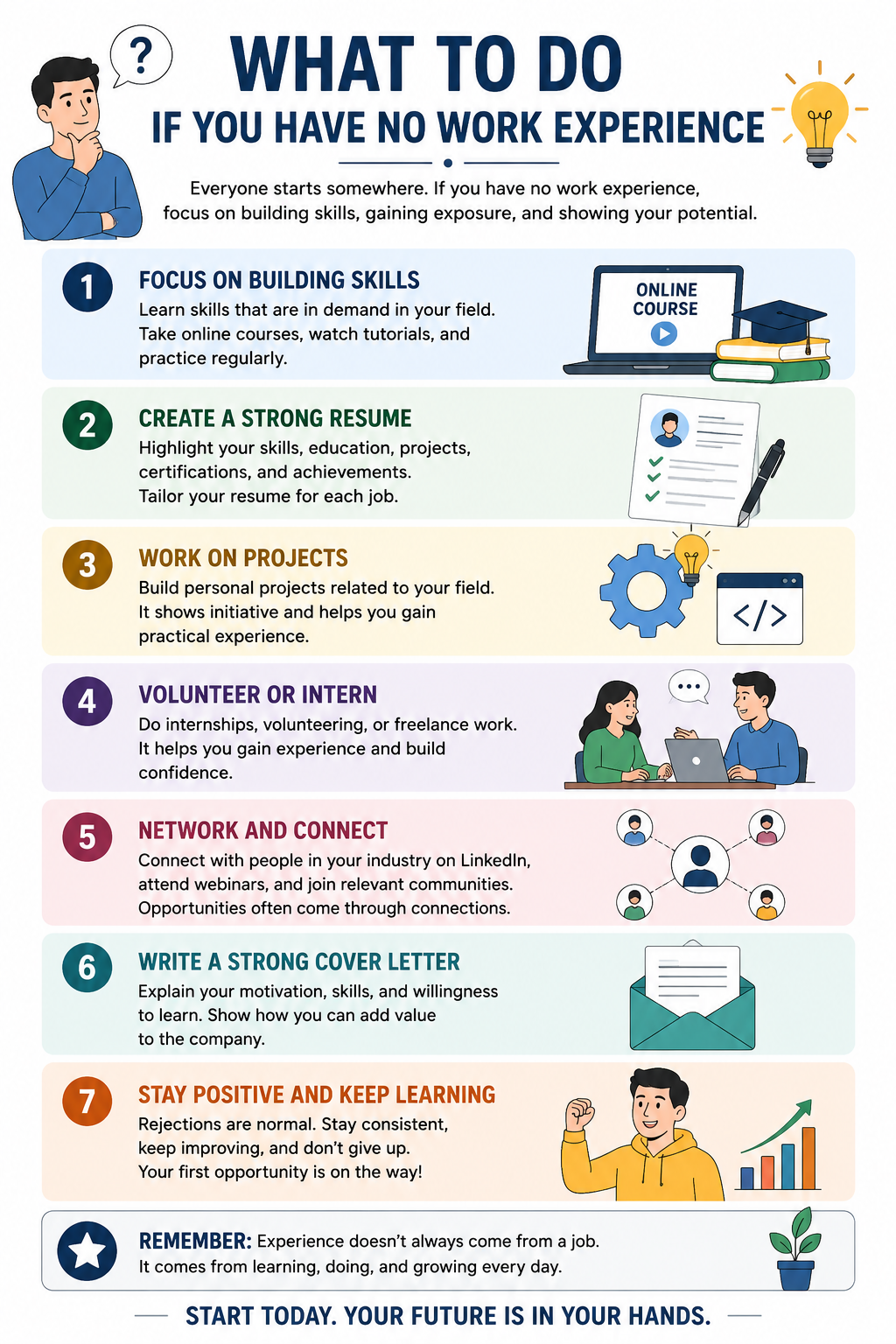
Chapter 1: Reframe Your Mindset – "Experience" Is Broader Than You Think
The first and most important step is to shift your mindset. Employers, especially when hiring for entry-level roles, aren't expecting you to check every box on a job description. Those postings are often a wishlist, not a strict list of requirements. They're looking for potential, not perfection.
So, what counts as "experience"? Way more than you'd guess. It's not limited to paid jobs. Think broadly about everything you've done:
- Class Projects and Academic Work: Any research, presentations, labs, or group projects where you collaborated, solved a problem, or demonstrated your skills.
- Campus Involvement: Leadership roles in clubs, organizing events, managing a student society's budget or social media.
- Volunteering and Community Engagement: Tutoring, working at a charity shop, helping a local non-profit with its website or social media.
- Extracurricular Activities: Being on a sports team teaches teamwork and commitment. Participating in a debate club shows strong communication skills.
- Personal or Freelance Projects: Starting a blog, building a website, creating a portfolio, or doing small paid gigs for friends and family.
- Part-Time Jobs (Even Unrelated Ones): Any job, from a summer gig at a cafe to a paper round, shows you're reliable, have a work ethic, and can manage your time.
Chapter 2: Identify Your Transferable Skills – Your Secret Weapon
Transferable skills are the abilities and experiences you gain in one context (like school or volunteering) that you can apply to a completely different job. These are your most powerful asset when you lack direct experience.
The Most In-Demand Transferable Skills:
Writing clearly, speaking confidently, active listening, presenting ideas. Built through class presentations, essays, or customer service.
Working well in groups, coordinating tasks, resolving conflicts. Built through sports teams, group projects, or volunteering.
Finding solutions, analyzing information, overcoming challenges. Built through handling difficult customers, technical issues, or planning events.
Prioritizing tasks, meeting deadlines, managing schedules. Built through juggling studies with jobs or organizing projects.
Using MS Office, social media, data entry, or basic coding. Built through school presentations, managing club social media, or building websites.
Taking charge, motivating others, starting new projects. Built through leading group projects, captaining teams, or starting blogs/fundraisers.
How to Identify Your Skills:
- Conduct a Skills Inventory: Write down everything you've done from the list above. For each activity, ask yourself, "What skills did I use here?" Look for patterns.
- Analyze Job Descriptions: Read job postings for entry-level roles you're interested in. Highlight the skills and keywords they keep mentioning. Now, match those keywords to your inventory.
- Ask Others: Ask a friend, professor, or mentor what they see as your strengths. Sometimes we're the last to recognize our own abilities.
Chapter 3: Build a Resume That Gets Noticed (Without Paid Experience)
Your resume is your first impression. You need to structure it to highlight your potential, not your lack of a job title.
1. Choose a Skills-Based (Functional) Format: Instead of a chronological resume that focuses on a work history you don't have, use a functional or skills-based format. This organizes your resume around your skills and accomplishments, making them the star of the show.
2. Rename "Work Experience" to "Relevant Experience": Under this new section, you can list all your valuable experiences that aren't traditional jobs. This includes internships, volunteer work, class projects, and leadership roles.
Relevant Experience
Marketing Campaign Project | University of Example | 2025
Led a team of four to develop a comprehensive marketing campaign for a local business. Conducted market research and created a social media strategy, resulting in a 15% increase in the client's social media engagement over the project period.
Digital Skills Volunteer | Local Charity Shop | 2024-2025
Managed the shop's Instagram account, creating weekly content that grew followers by 25%. Assisted customers and processed donations, developing strong customer service and organizational skills.
3. Write a Strong Personal Profile: Start your resume with a short, punchy statement (3-4 lines) that summarizes who you are, what you're looking for, and your key strengths. Use the keywords from the job descriptions you're targeting.
"Motivated and recent graduate with a passion for digital marketing. Proven ability to develop creative content strategies through academic projects and volunteer work. Highly organized and collaborative, seeking a marketing assistant role to contribute to a dynamic team."
4. Quantify Your Achievements: Wherever possible, use numbers to demonstrate your impact, even for non-work activities.
- Weak: "Helped the club raise money."
- Strong: "Planned and organized a fundraising event that successfully raised $2,000 for charity."
- Weak: "Managed social media for a student society."
- Strong: "Successfully grew social media engagement by 25% through targeted content creation."
5. Use Keywords from the Job Description: Many companies use Applicant Tracking Systems (ATS) to screen resumes. To get past these systems, you need to use the same language as the job posting. If they ask for "project management skills," don't just say you're "organized."
Chapter 4: A Cover Letter That Tells Your Story
Your cover letter is your chance to explain why you want the job and how your specific skills make you a great fit.
- Don't repeat your CV. Use the letter to connect the dots between your experiences and the job's requirements.
- Be specific and show enthusiasm. Explain why you're interested in that particular company or role.
- Use the STAR method: For your key example, structure your story using Situation, Task, Action, Result to show how you delivered a positive outcome. This is far more powerful than just saying you have a skill.
- Address it to a specific person if you can find the name of the recruiter or hiring manager on LinkedIn or the company website.
Chapter 5: Where to Look for Jobs and How to Apply
1. Be Strategic with Your Search: Instead of "spray and pray," focus on roles that are genuinely a good fit for your current qualifications. Don't apply for jobs that require a PhD if you have a bachelor's degree.
- Entry-Level Roles: Look for positions like assistant, junior, associate, or trainee roles.
- Specialize: Instead of just a general "Marketing Assistant," consider a specific role like "Content Marketing Assistant" or "Social Media Coordinator."
- Consider Apprenticeships: These allow you to "earn while you learn" and gain qualifications and practical experience.
2. Use the Right Job Boards: Don't limit yourself to just one site. Cast a wider net.
- General Sites: Indeed, LinkedIn Jobs, Glassdoor
- Specialized Sites: For specific industries or for internships and apprenticeships.
- Company Websites: Many employers only advertise directly on their own careers page.
3. Consider "Speculative" Applications: Even if a company isn't advertising a role, you can send a speculative application to express your interest. This shows initiative and can uncover hidden opportunities.
4. Use AI Carefully: You can use AI to research industries, get ideas for your CV, or refine your writing. However, never copy-paste AI-generated text verbatim. Recruiters can spot it and it can make your application seem generic. Use it as a starting tool, but always write for humans to show your personality.
Chapter 6: The Power of Networking
Networking isn't about asking for a job. It's about building relationships and gaining information. It's one of the most effective ways to find opportunities, especially when you don't have a traditional CV.
1. Who is in Your Network? Your network is bigger than you think:
- Alumni from your school or university
- Professors, lecturers, and mentors
- Friends, family, and neighbors
- People you've met through volunteering or extracurriculars
2. How to Network Effectively:
- Attend Virtual and In-Person Events: Career fairs, guest lectures, webinars, and industry meetups.
- Request Informational Interviews: Reach out to someone in a role you find interesting and ask for 15 minutes to ask for advice, not a job. This is a low-pressure way to learn and make a connection.
- Use LinkedIn: Create a professional profile, connect with people you know, and engage with relevant content. A half-finished profile can signal a lack of seriousness, so be sure to complete it.
Chapter 7: How to Gain Experience Now
You don't have to wait for a job to build your experience. Take proactive steps right now.
Short-term, often structured work placements. Great for gaining deep insight into an industry. Provides practical experience, industry contacts, and can lead to a job offer.
Unpaid work for a charity or non-profit. Highly flexible, builds skills, demonstrates initiative, and can build a portfolio.
Using your skills (e.g., writing, design, coding) for small paid projects on sites like Upwork or Fiverr. Gives you real-world examples for your portfolio, teaches professional communication, and builds your network.
Creating a blog, YouTube channel, portfolio, or app. Showcases your passion and skills in a concrete way. It's tangible proof of your initiative.
Taking courses on platforms like Coursera, LinkedIn Learning, or edX. Demonstrates commitment to professional development and fills gaps in your technical knowledge.
Chapter 8: Master the Interview
Getting an interview is a huge victory. It means the employer already sees potential in you. Now you need to confirm their good instincts.
1. Prepare Your Stories: You'll be asked behavioral questions like, "Tell me about a time you faced a challenge" or "Give an example of teamwork." Prepare your answers using the STAR method: Situation, Task, Action, Result.
2. Research the Company: Don't just visit their website. Understand their mission, read recent news, and check out their social media. This shows you're genuinely interested and helps you ask smarter questions.
3. Practice Your "Elevator Pitch": Be ready to answer, "Tell me about yourself." This is your 60-second summary of who you are, what you're studying/doing, and what you're looking for. Connect it to why you want this role.
4. Prepare Questions to Ask: Always have questions ready. It shows you're engaged and thoughtful. Good questions include:
- "What does a typical day look like in this role?"
- "What are the biggest challenges the team is facing right now?"
- "How do you measure success for someone in this position?"
5. Nail the Basics:
- Dress professionally: One step above the usual office dress code is a safe bet.
- Arrive early. If it's a video interview, test your tech an hour beforehand.
- Be polite to everyone you meet, including receptionists. Employers often ask for their feedback.
- Send a short, polite follow-up email within 24 hours to thank them for their time.
Chapter 9: Stay Resilient and Keep Going
The job search can be tough, and rejection is a normal part of the journey. Even experienced recruitment veterans warn that the process can be brutally competitive and emotionally draining.
- Don't take it personally: As James Reed says, "If you can develop a super thick skin and be persistent and resilient, it will serve you well."
- Be kind to yourself: Rejection is demoralizing, but the process can ultimately lead to a better-fit role.
- Celebrate small wins: Each application, each networking conversation, and each interview is a step forward, not a failure.
- Keep learning: Use any feedback you get to refine your CV, cover letter, and interview techniques.
Chapter 10: FAQ – Your Burning Questions Answered
Conclusion: Your Career Starts Now
The "experience paradox" is a challenge, but it's not an impossible one. It's a test of your resourcefulness and determination. You may not have a fancy job title on your CV, but you have skills, you have passion, and you have the ability to learn.
Remember the story of Kara Allen KasaKaitas, who after graduating with a microbiology degree, could only find work cooking chicken at a fast-food restaurant for $5.50 an hour. It was "very humbling," she said. But she took a temp job doing microbiology at a food manufacturing facility, transitioned to a chemistry role, and is now the Director of Recruitment and University Relations at a major science company.
Her journey shows the path: start where you are, use what you have, and keep moving forward. Your first step doesn't have to be your dream job. It's a stepping stone to build the career you want.
Your plan today is your success tomorrow. Now go get that first opportunity. 🚀