How Recruitment Agencies Work for Overseas Jobs – Your 2026 Guide
Introduction: Your Bridge to a Global Career
Working abroad is a dream for millions of professionals worldwide. The promise of better pay, new experiences, career growth, and cultural enrichment is incredibly appealing. But let's be honest – the international job market can feel like a maze. How do you find legitimate employers? How do you navigate visa requirements? How do you stand out when you're competing with candidates from around the world?
This is where overseas recruitment agencies come in. They serve as a bridge between job seekers and international employers, simplifying what can be an overwhelming process. Think of them as your experienced guide in a foreign land – they know the terrain, the rules, and the shortcuts.
But here's the catch: not all agencies are created equal. Some are legitimate and can transform your career. Others are predatory and can cost you time, money, and heartache. This guide will show you exactly how reputable agencies work, what they do for you, and how to protect yourself from scams. Whether you're a fresh graduate or an experienced professional, understanding this process is your first step toward a successful international career.
Chapter 1: What Exactly Is an Overseas Recruitment Agency?
The Middleman That Matters: At its core, an overseas recruitment agency is a professional intermediary between job seekers and employers in other countries. Their primary goal is simple: match the right candidate with the right job, streamlining the hiring process for both parties.
Here's the crucial difference: you are not the agency's client. The company that hires them is. This means you, as a job seeker, typically do not pay for their services. The employer pays the agency a fee for finding and placing the right candidate. This distinction is important to understand, and legitimate agencies should always be transparent about their fee structure.
The Global Recruitment Landscape: In 2026, the international recruitment market is a major component of the global economy. Recruitment firms operate across regions to connect employers with qualified professionals, filling roles in sectors like healthcare, engineering, IT, and hospitality. Well-established agencies maintain networks that span continents and industries, making them indispensable partners in global workforce strategy.
Why This Matters for You:
- Agencies have access to job opportunities that are not always listed on public job boards
- They understand the nuances of different countries' job markets, cultural expectations, and legal requirements
- They specialize in specific regions (like the United Arab Emirates) or industries, giving you targeted support
Chapter 2: How the Process Works – A Step-by-Step Guide
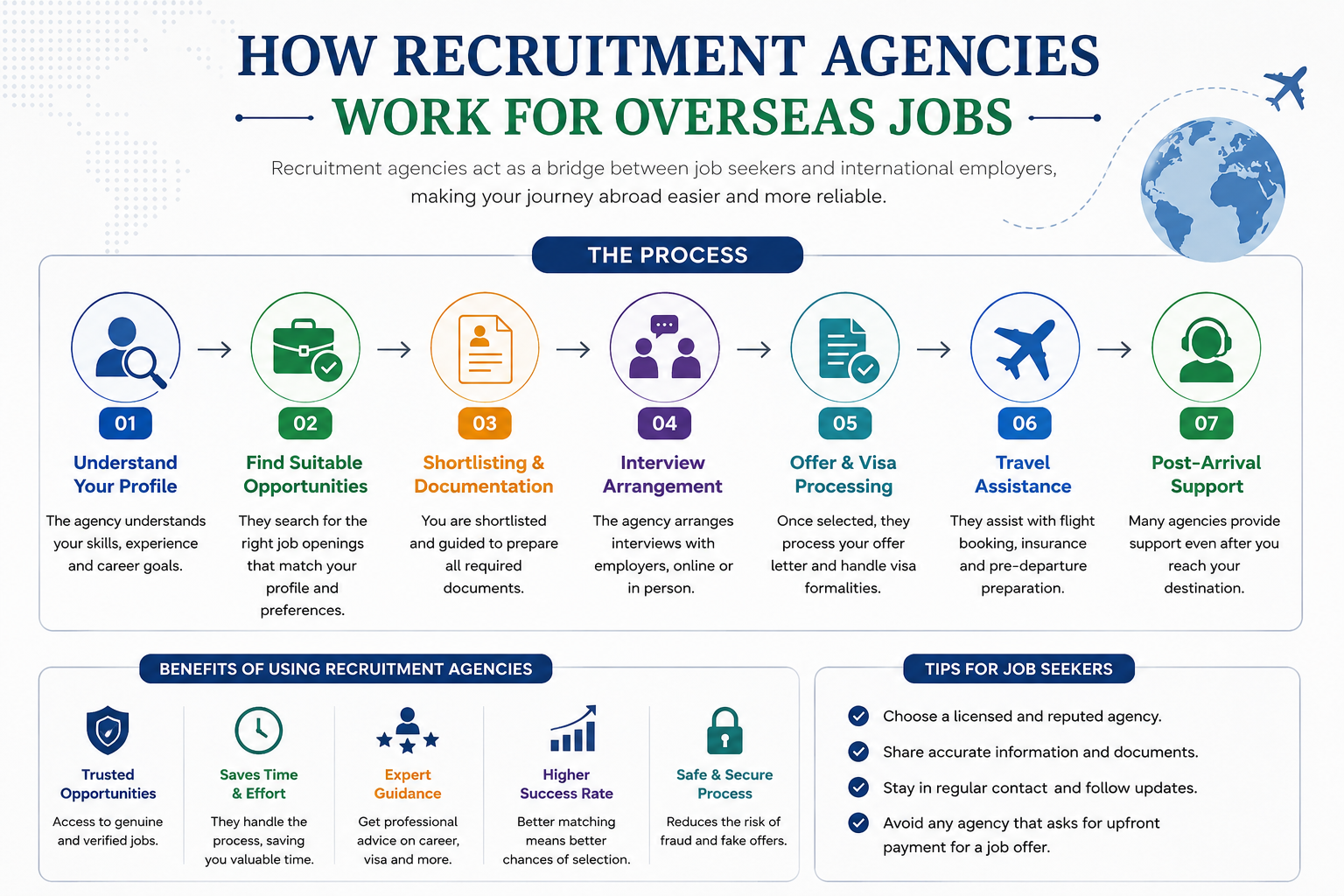
Here's what you can expect when working with a reputable overseas recruitment agency.
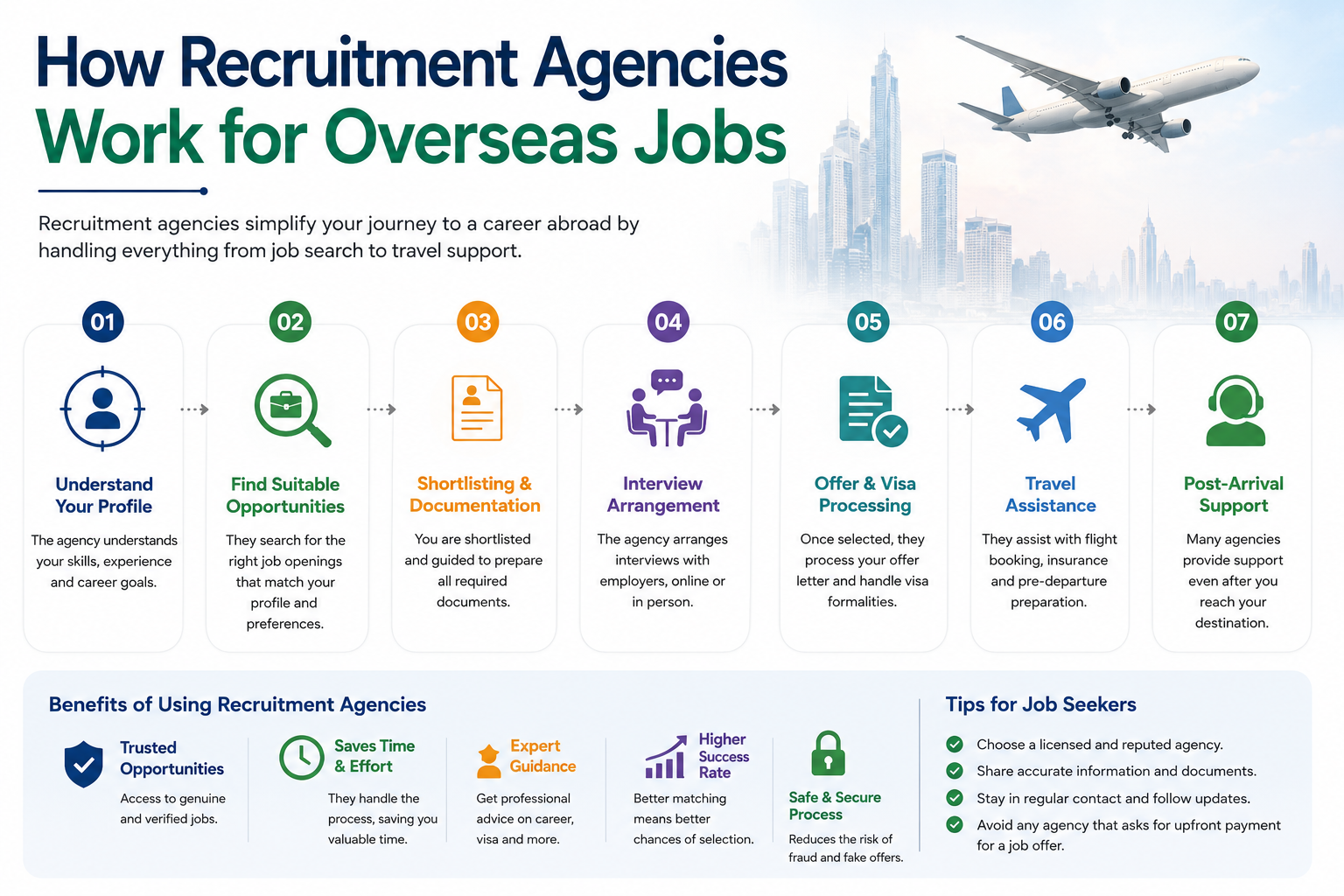
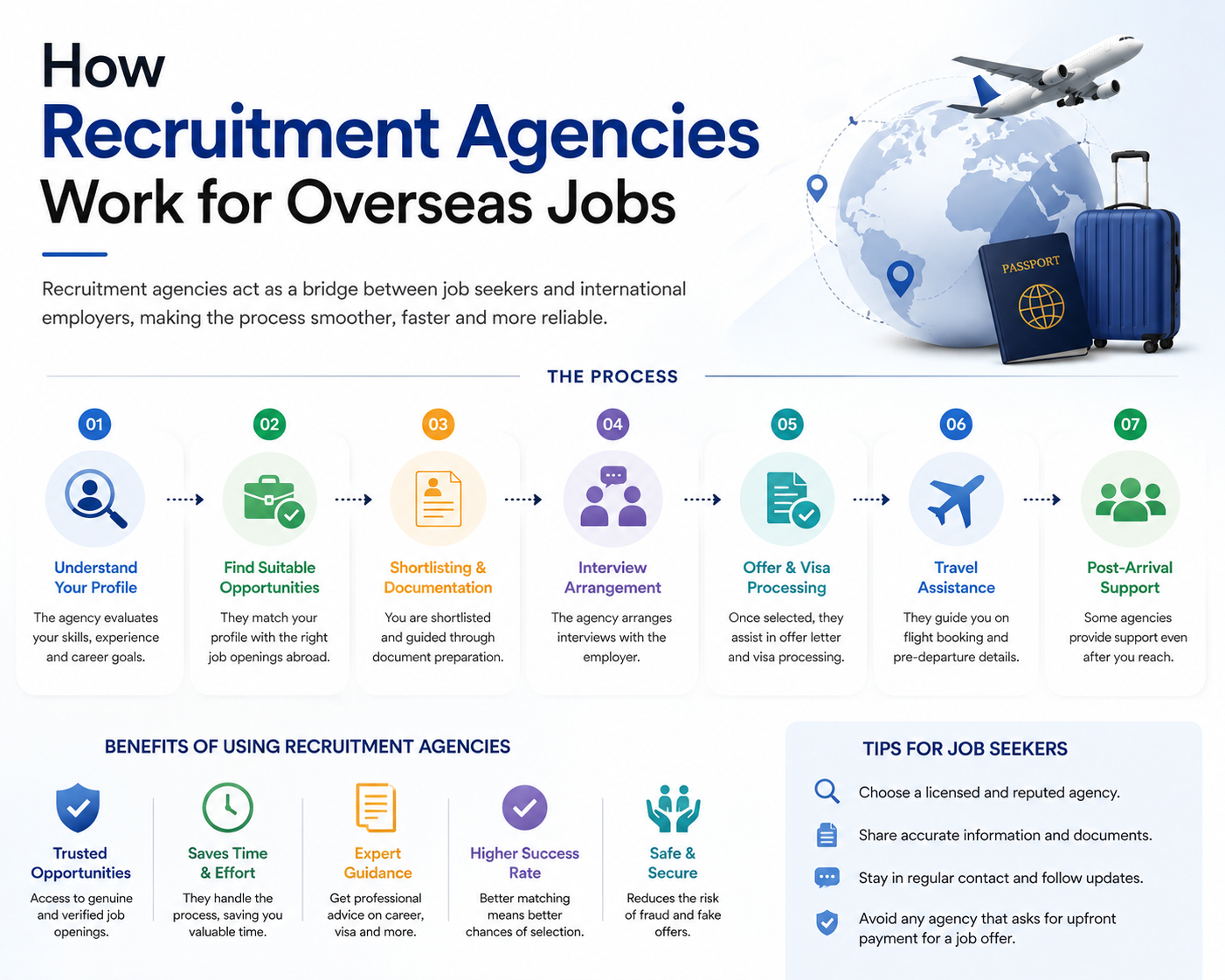
Find the agency, register, submit your resume and credentials. The agency may ask for detailed forms, assessments, or skill tests. This is your chance to show what you bring to the table.
Recruiters analyze your skills, conduct initial screening interviews, and provide guidance on tailoring your resume. Pro Tip: Take trade tests seriously – they're designed to help you succeed.
The agency submits your application, coordinates interviews across time zones, and provides details about the employer and local work culture.
Assists with job offers, explains local employment terms, guides you through visa processing, and provides post-placement support including travel arrangements and housing recommendations.
Chapter 3: Key Services Reputable Agencies Provide
| Service | What It Involves | Why It Matters |
|---|---|---|
| Job Matching | Analyzing your skills, qualifications, and preferences to find aligned opportunities | Saves you time and targets roles where you're genuinely competitive |
| Resume Assistance | Guidance on creating a resume that stands out and highlights relevant strengths | International CVs often have different expectations; tailoring is crucial |
| Interview Preparation | Coaching, practice sessions, and tips to boost confidence for international interviews | Reduces anxiety and improves performance |
| Visa & Documentation Support | Navigating the complex legal requirements for work permits and visas | Prevents costly errors and delays |
| Relocation & Onboarding | Support with travel arrangements, housing, and cultural orientation | Ensures a smoother transition into your new life and work environment |
| Post-Placement Follow-up | Continued support to ensure a successful transition into your new role | Provides a safety net and resource for early challenges |
Chapter 4: The Employer Perspective – Why Companies Use Agencies
Understanding why employers use recruitment agencies helps you see the full picture.
| Reason | Explanation |
|---|---|
| Access to Specialized Talent | Agencies have deep industry networks and can find candidates with niche skills that are difficult to locate locally |
| Time and Cost Savings | Outsourcing recruitment saves internal HR teams significant time and resources, especially for complex global hires |
| Compliance and Risk Reduction | Reputable agencies understand labor laws and immigration procedures in multiple jurisdictions, ensuring employers stay compliant and reducing legal risks |
| Wider Talent Pool | Agencies help companies reach candidates they wouldn't otherwise find, especially in countries where they have no physical presence |
Chapter 5: Protecting Yourself – How to Spot a Good Agency (and a Bad One)
The Dark Side of the Industry: The overseas recruitment market has a significant problem with fraud and exploitation. A study interviewing overseas workers found that they paid, on average, $3,000 to $6,000 in fees to various layers of the labor supply chain – while official visa fees in host countries were at most $400. This exorbitant amount is owed to an opaque process with many extorting actors.
Other common problems include:
- Fraudulent job offers: Agents offer "open" or "free" visas that don't actually exist, leading to deportation
- Unregistered recruiters: Fake visas and lost savings are common outcomes
- Restrictive contracts: Candidates sometimes arrive in a foreign country only to be tied to restrictive contracts they weren't able to read before deployment
- Predatory practices: Agents take advantage of workers' desire for a better life, creating a reverse auction where candidates bid for opportunities
Red Flags – Walk Away If You See These:
Legitimate agencies are paid by employers. Walk away.
Real hiring processes take time. This is a scam.
Most countries require a job offer for a work visa. This is likely fraud.
Research the company – check their website, social media, and reviews. If nothing exists, don't engage.
They should be transparent about all processes and fees.
It probably is. Trust your gut.
Green Flags – What to Look For:
Verify their credentials with relevant government bodies.
A specialized agency understands your field's nuances and requirements.
They clearly explain their processes, fees, and services.
Well-connected agencies have broader employer networks, increasing your chances.
Check online reviews and ask your network for referrals.
Questions to Ask Before Signing Up:
- How does your fee structure work? – Get clarity on who pays and what you might be responsible for.
- Does your firm have partners and connections where I want to hire? – Ensure they have actual local knowledge and networks.
- What is the most common source of candidates you place? – Are they actively recruiting or just doing LinkedIn searches?
- How long will it take you to provide a shortlist? – If they answer without asking you clarifying questions first, be wary.
- Can you tell me about international placements you've done? – Past success is a good predictor of future results.
- Does your firm belong to an international network or association? – This shows commitment and global reach.
- Do you know the local time in the country where I want to work? – This basic awareness shows experience and professionalism.
FAQ – Your Burning Questions Answered
Conclusion: Your Global Career Awaits
Working abroad is a transformative experience. It can boost your career, broaden your perspective, and change your life. A reputable overseas recruitment agency is your partner in making that dream a reality.
Remember these key takeaways:
- Legitimate agencies are paid by employers, not by you
- Do your research – verify licenses, read reviews, and ask tough questions
- Know the red flags – never pay for placement, avoid "too good to be true" offers, and stay away from agencies that are vague about their processes
- Use agencies as a resource – leverage their expertise in resumes, interviews, and visa support
The right recruitment agency can make your journey smoother, faster, and safer. The wrong one can cost you time, money, and hope. Choose wisely. Your skills are valuable, and the world is full of opportunities. Now go find them. 🚀